.svg)
.svg)


Filing a cyber insurance claim can quietly change how your business is assessed by insurers, lenders, and clients, not just your next premium. The effects can last long after your systems are restored.
Picture a business in London or Greater London that's just steadied itself after a cyber attack and files a claim with its cybersecurity insurance provider, expecting the claim to close the matter. It rarely does.
A single incident can quietly reshape how insurers, lenders and even clients size your business up for years afterwards. Filing a claim changes more than next year's premium - it changes how you're read.
Cybersecurity insurance exists precisely to cover that moment: data recovery, legal costs, business interruption, the lot. Ransomware attacks grew by nearly 93% in 2021, which is why more businesses now treat the policy as essential rather than optional.
Yet the real cost of using that policy sits past the crisis itself, in how your business gets perceived long after the systems are back up.

How a cyber incident shapes your business profile
File a claim after a cyber incident and the event becomes part of your business record - not just with your current insurer, but visible to other insurers, banks, and sometimes clients too.
Insurers lean on past claims to price risk, so a cyber claim on your file can read as higher risk than a clean one. That often means stricter terms, higher premiums, or - in the worst case - real difficulty finding cover at all next time round.
Lenders work the same way when they check insurance histories before approving a loan. A recent cyber claim can make them question your risk management, and that question can slow down or sink the funding itself.
Clients add a third layer, particularly the ones carrying their own compliance obligations. They may ask about your incident history directly, and a claim on record can read as weaker security even where your systems have moved on since.
Beyond the premium: What changes after a cyber insurance claim?
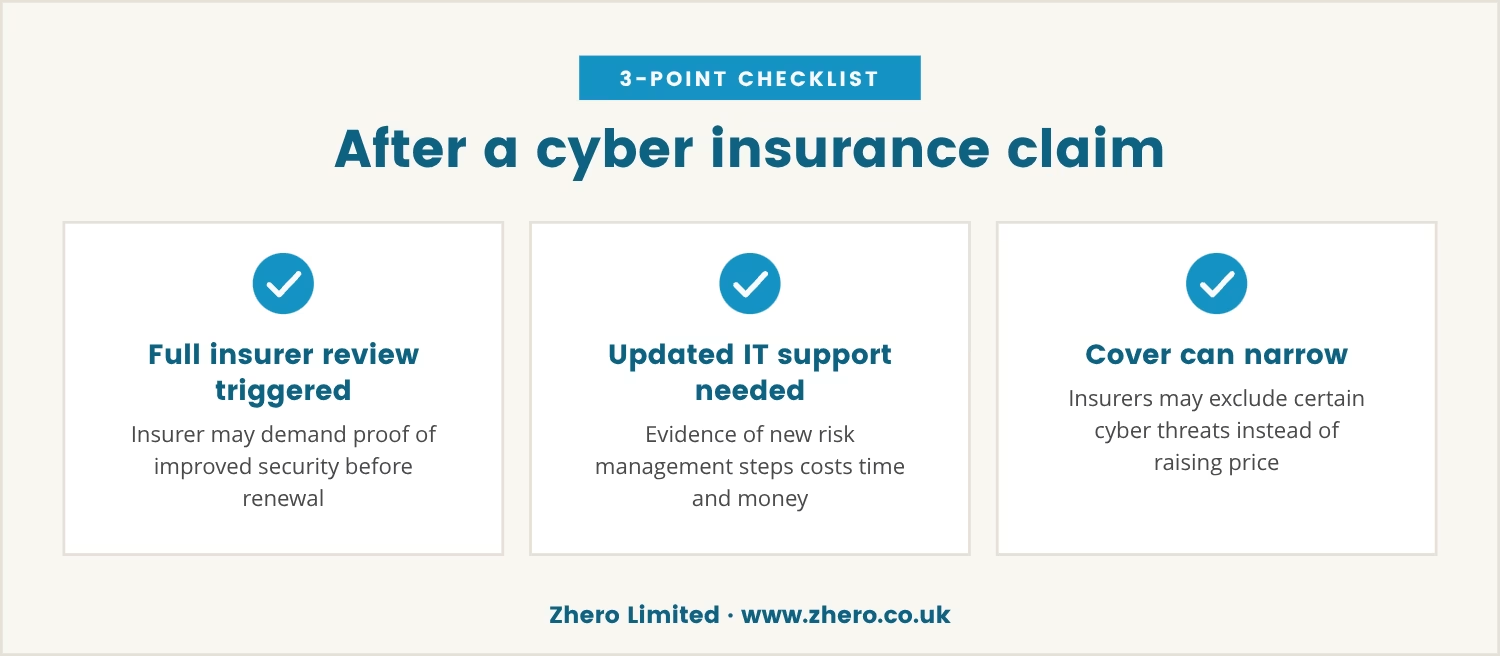
Filing a claim does more than move your premium up a notch - it can trigger a full review of your business by the insurer, who may ask for proof of improved security measures before agreeing to renew.
That review can mean updating your IT support insurance or producing evidence of new risk management steps, which costs time and sometimes money of its own.
In some cases, the insurer narrows the cover instead of just raising the price, excluding certain cyber threats from the renewed policy altogether. Narrower cover is harder to work with precisely when you need it most.
Cybersecurity insurance in London: Local context, lasting impact
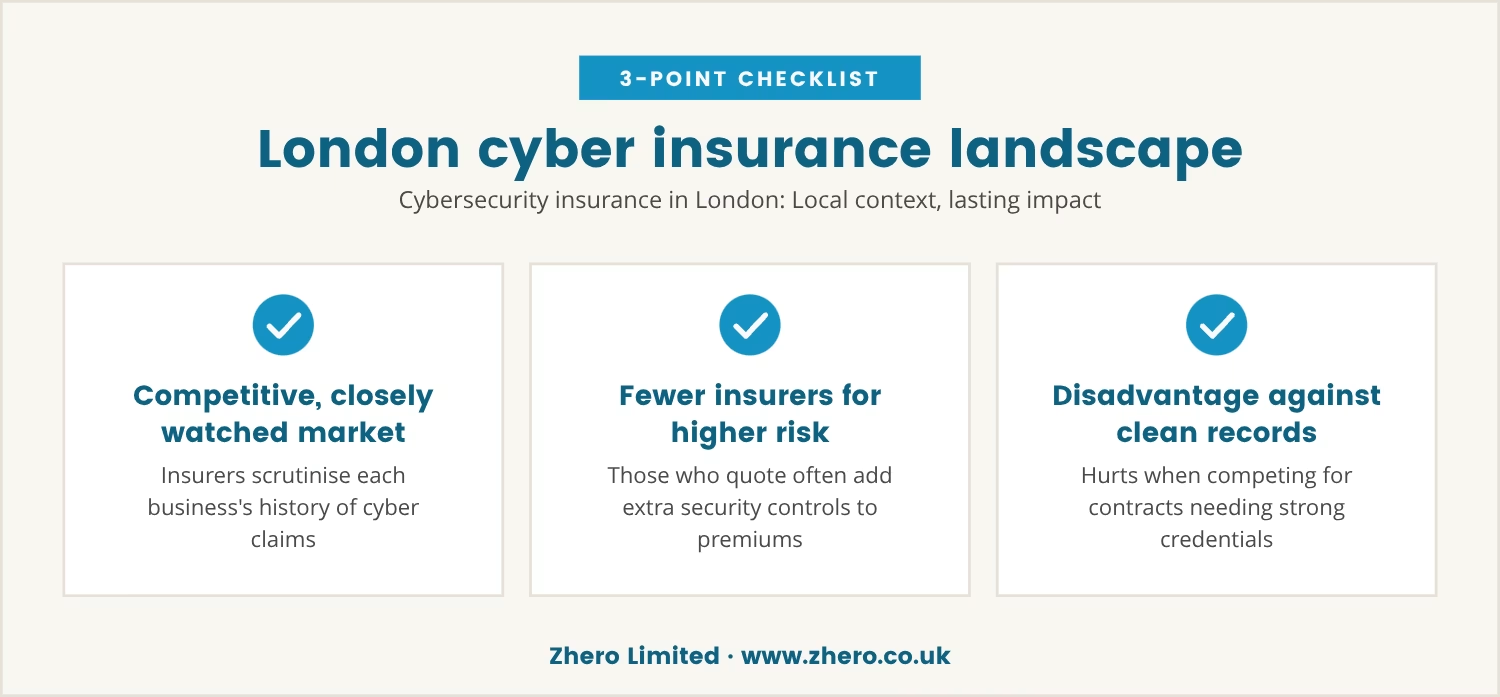
London and Greater London run a cybersecurity insurance market that's both competitive and tightly regulated, and insurers there watch a history of cyber claims closely.
Once your business reads as higher risk, fewer insurers stay willing to quote you at all, and the ones who do often price in extra security controls alongside the premium.
That gap shows up hardest against competitors with a clean record, especially when you're both bidding for contracts that demand strong cyber security credentials.
The ripple effect: How claims influence future decisions
A cyber insurance claim rarely stays contained to insurance - it changes how other organisations read your business across the board.
- Insurer trust: Future insurers may see your business as riskier, leading to tougher terms.
- Lender confidence: Banks and lenders could view your claim as a sign of weak risk management.
- Client perception: Clients may worry about your ability to protect their data.
- Contract requirements: Some contracts require proof of no recent cyber incidents.
- Vendor relationships: Suppliers may reassess their own risk if you have a claim on record.
Those effects can keep running long after your systems are restored and the business itself feels back to normal.
What insurers look for after a cyber event
Insurers never stop at whether you had a cyber attack - they want to see how you responded and what you've changed since to stop it happening twice.
Our own view is that one prescribed model does that job better than a patchwork of one-off fixes: one delivery approach, our own tools, one minimum security framework sitting under every client. If that baseline doesn't suit how a business wants to run things, we're probably not the right fit for each other.
We hold to that even though we can't promise what any individual insurer decides on the back of it - that call sits with them, not us, and it may possibly shift depending on the case.
What follows breaks down the areas insurers tend to focus on.
Incident response
Insurers assess how quickly and effectively you responded to the breach, since a strong response can help rebuild the trust a claim otherwise dents.
Security improvements
They look for evidence that you've upgraded your cyber defence - new software, staff training, whatever closes the gap that let the incident happen.
Ongoing monitoring
Continuous monitoring is what shows you're being proactive rather than reactive, which matters once an insurer is deciding whether to trust you again.
Policy updates
Updating your cyber insurance policies and procedures signals that you've actually learned from the event, not just patched the immediate hole.
Third-party assessments
Some insurers ask for an external review of your systems before offering new cover, which gives them a second opinion beyond your own account.
Documentation
Keeping detailed records of your response and improvements makes the next insurance application smoother, because you're not reconstructing the story from memory.
Communication
Clear communication with your insurer and stakeholders helps manage expectations, and it signals accountability at the same time.
Managing your reputation after a claim
Your reputation is what's really at stake once the immediate crisis has passed, and how you handle the aftermath decides which way it moves.
Being open about the steps you've taken to tighten security can reassure clients and partners, while also showing future insurers you're treating risk management seriously.
You may need outside IT consulting support to review your systems and produce evidence of the improvements, which matters most when you're negotiating new contracts or applying for loans.
Preparing for the long-term consequences
Systems coming back online doesn't close the file - insurance, lending and client relationships can all keep feeling the aftershock well past that point.
Staying ahead of it means continuing to tighten your cyber security and documenting every step along the way, because that record does double duty: future insurance applications move faster, and clients and partners trust the business more in the meantime.
Would your business be able to show clear evidence of improved security if a future insurer or client asked for it?
Planning ahead and staying proactive is what shrinks the long-term reach of a single cyber incident on your business profile.

How your business can move forward with confidence
Many businesses in the 5 to 40 user range find themselves navigating new challenges after a cyber incident, especially when it comes to insurance and reputation. At Zhero Limited, we understand how a single event can shape how others see your company.
If you want to see how we approach these challenges or talk about your own setup, we invite you to start a conversation with our team.
Ready to see the real impact of your cyber claim?
You can try our services risk-free and receive a full cybersecurity audit at no cost, so you know exactly where your business stands.
Frequently asked questions
How does making a cyber insurance claim affect my ability to get new insurance policies?
A claim puts you in a higher risk bracket in most insurers' eyes, which tends to mean stricter requirements, higher premiums, or trouble finding cover at all. Showing clear evidence of improved security is what offsets that read.
Will a past cyber incident make it harder to secure business loans?
Yes - lenders often check your risk history, including cyber claims, before approving funding. A recent claim usually means extra documentation or proof that you've strengthened your security since.
What steps can I take to rebuild trust with clients after a cyber attack?
Be straightforward about what happened and focus on what's changed since: new security measures, staff training, third-party assessments. That's what lets clients feel confident their data is protected going forward.
How long does the impact of a cyber insurance claim last?
It can run several years, depending on how insurers, lenders and clients continue to view the business. Detailed records of your improvements and consistently strong security practices shorten that window.
Do I need to update my incident response plan after a claim?
Yes - an updated incident response plan shows insurers and clients you've learned from the event and are serious about preventing a repeat. Regular reviews keep the business ready for whatever comes next.