.svg)
.svg)


Generic IT support often closes tickets without addressing the compliance risks unique to financial services. This leaves firms exposed to regulatory issues that technical fixes alone cannot resolve.
IT support finance works, at its simplest, by closing tickets: a password resets, a server reboots, a network comes back online. In financial services that mechanism breaks down the moment a technical fix leaves no record behind, because what looks resolved on a screen can still fail an audit six months later.
That gap exists because financial firms operate under rules generic support was never built to satisfy. Every system change, every piece of access to sensitive data, every incident needs a paper trail that proves it happened the right way. When a support provider treats that trail as optional, the business inherits the exposure quietly, long before anyone notices.
Most financial service businesses lean on IT support purely to keep the lights on. The real divide, though, is how a provider handles the moment something breaks - whether it closes the ticket or closes the risk.
Strict data protection and audit rules sit over every part of financial services operations, and that changes what "resolved" even means. A fix a typical business would call finished can leave a financial firm still exposed to fines or legal action, simply because nobody logged what was changed and why.
A support service that doesn't understand these obligations leaves gaps you can't see until they surface - usually during an audit, which is the worst possible time to find them.

Why generic support misses the mark in financial services
Generic IT support is built around speed: close the ticket, restore access, move on. That instinct is exactly what creates the problem for a financial services firm, because compliance and sensitive data carry risks a quick fix was never designed to cover.
A retail shop is happy the moment email comes back. A financial services company needs more than that - every fix logged, every action auditable, every step compliant with the rules governing the sector. Skip that layer and the support team has created an invisible vulnerability instead of solving one.
Downtime compounds the problem. A short outage doesn't just annoy staff - it can disrupt transactions, delay regulatory reporting, or trigger scrutiny the firm never asked for. Support teams who don't grasp that pressure deliver fixes that are technically correct and practically risky at the same time.
Technical skill alone was never going to be enough here. The sector demands an understanding of how data must be handled and reported, and without it, a job that looks complete on paper can leave a firm exposed to penalties it won't see coming.
Compliance obligations: The hidden layer in support for financial services
Compliance isn't a checkbox for a financial services business - it decides how every issue gets handled, from a minor glitch through to a full system failure.
Regulations often require that access to sensitive data gets logged and that every system change is documented in full. Skip those steps and the business can fail an audit even after the technical problem itself is fixed cleanly.
This runs deeper for firms juggling both UK and international compliance standards, where local requirements stack another layer of complexity onto an already demanding baseline. A support team that doesn't understand those specifics will miss what the regulator actually expects.
We run one model here, our own tools, a minimum security framework underneath everything - and honestly, we think a firm either accepts that baseline or we're not the right fit for them.
That's not a framework catalogue we're selling; it's a floor we won't go under, because a support provider improvising its security posture firm by firm is how gaps get missed in the first place.
We're not claiming it covers every regulatory regime a client might face - it's the minimum we build from, not a blanket promise. A support service that treats compliance as someone else's problem will miss these details every time, and the firm pays for it in fines, reputational damage, or worse.
IT support finance: What makes support for financial services different?
Support for a financial services company was never just a technology question - it's risk management wearing an IT hat. Here's where it actually diverges from generic support.
Understanding compliance requirements
Support teams need to know the rules governing financial data, from GDPR through to FCA guidance. That knowledge shapes every single response before a fix even starts.
Documenting every action
Every fix, every change, every touch of sensitive data gets logged. That's the audit trail a regulator will ask to see.
Protecting sensitive data
Financial institutions sit on personal and financial information constantly. Support has to keep data protection measures running, not bolted on as an afterthought.
Managing downtime differently
A few minutes offline can carry real consequences for a financial firm. Support has to prioritise uptime and keep disaster recovery ready to go.
Proactive monitoring
Catching issues before they become problems matters more here than almost anywhere else. Proactive monitoring is what keeps compliance breaches and reliability failures from happening in the first place.
Supporting audits
Support teams should have documentation and evidence ready the moment an audit lands. That readiness is what turns a stressful compliance check into a routine one.
The real risks of treating financial firms like any other business
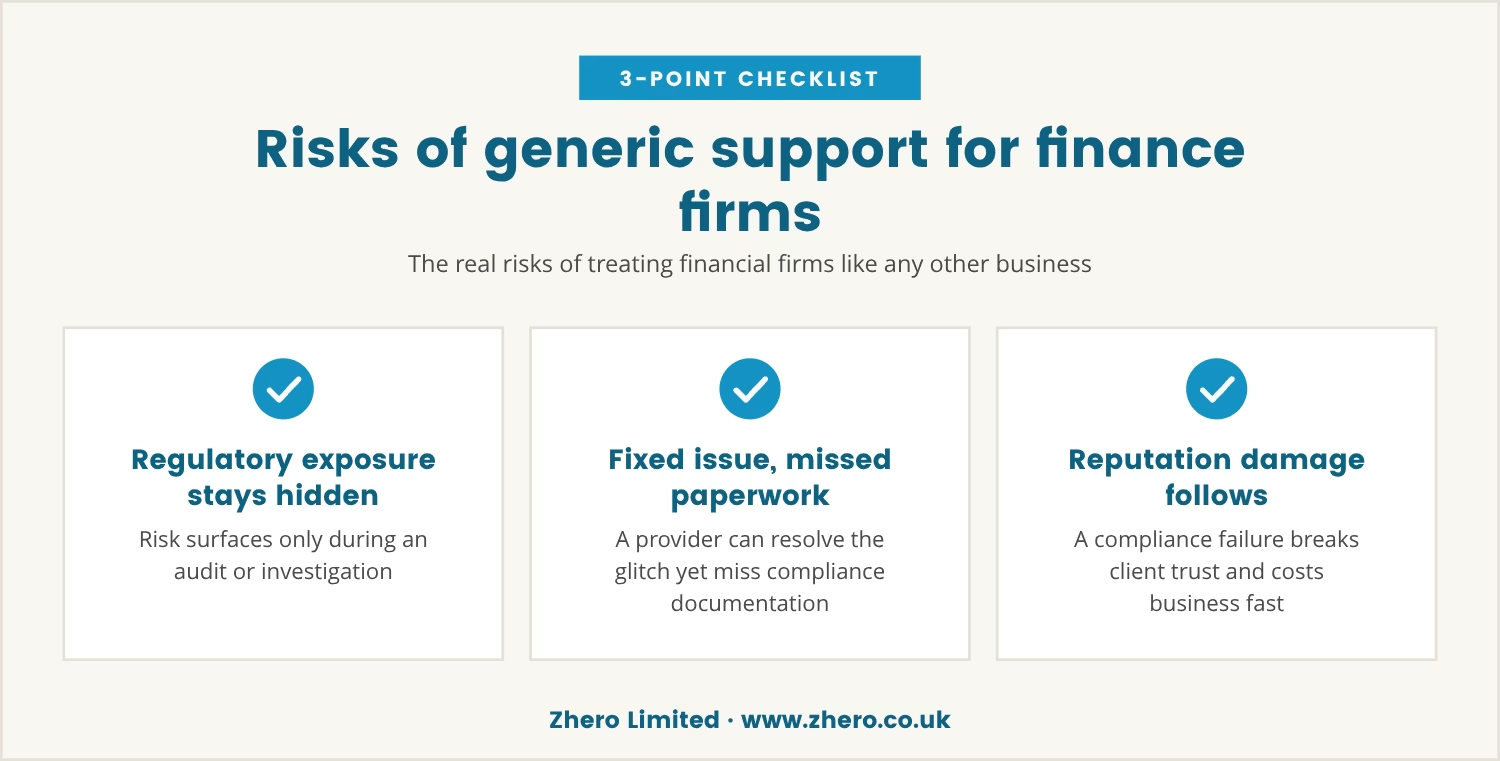
Treat financial services support like any small business and the fallout goes well past a slow laptop or a missing file. The real risk is regulatory exposure, and it stays invisible right up until an audit or investigation forces it into view.
A provider who doesn't understand the sector can fix the technical issue and still miss the compliance documentation sitting underneath it. That gap is what turns into a failed audit, a fine, or legal action down the line.
Reputation takes the next hit. Clients trust financial firms to protect sensitive data and follow the rules without exception, and a compliance failure breaks that trust fast - taking business with it.
Choosing an IT support partner, then, was never purely a technical decision. It's about finding a team that understands the finance industry and the risks that come baked into it.
How to spot the right IT support partner for your financial firm
Not all IT support is built the same, and here's what separates a provider ready for financial services from one that isn't:
- Regulatory knowledge: they understand the rules governing financial firms and can explain exactly how their support keeps you compliant.
- Audit-ready documentation: they keep clear records of every action, which makes audits easier instead of stressful.
- Proactive monitoring: they use tools and processes built to spot issues before those issues become problems.
- Disaster recovery planning: they have plans ready to restore systems fast after an incident, keeping downtime to a minimum.
- Data protection focus: they go beyond fixing technical issues to actively protect sensitive data.
- Experience with financial technology: they already know the systems and software running the finance function.
Why proactive support matters more in the financial services industry
Proactive support isn't a nice extra for a financial services provider - it's the baseline. Wait for problems to surface and the firm is already exposed to compliance breaches or data loss by the time anyone notices.
A proactive provider monitors systems, applies updates, and checks for vulnerabilities before any of it causes trouble. That's what lets financial firms stay ahead of regulatory change instead of reacting to it after the fact.
It also frees support teams to optimise systems for productivity rather than just putting out fires, which keeps a financial business competitive in a market that doesn't forgive slow responses.
If you were to review your current support provider, would you find evidence of proactive monitoring and compliance-focused processes?
The cost of ignoring compliance in IT support for financial services
Ignoring the compliance layer in IT support gets expensive fast. Fines for data breaches or failed audits can run into thousands of pounds, but the sharper cost is usually reputational.
A financial services business that suffers a compliance failure often finds it harder to win new clients or keep existing ones. Trust is the entire currency of this industry, and one incident can undo years of work built on it.
Outsourcing IT support to a team that actually understands financial services, then, is risk management - not a cost line. It's what stops a technical fix from quietly becoming tomorrow's problem.
We think the safer route isn't a provider chasing every sector at once - it's one willing to build compliance and an audit trail into how it works by default, not bolt them on after something's already gone wrong. If a provider can't show you that work before you sign, that's possibly the clearest sign they're running the same playbook on every business that walks through the door.

How Zhero Limited helps financial firms avoid hidden compliance risks
Many financial service providers in the 5 to 40 users range find themselves caught between general IT support and the strict demands of compliance. At Zhero Limited, we understand how easily a technical fix can become a regulatory problem if the details are missed.
We invite you to see how our approach addresses both your technology needs and your compliance obligations. Let us show you what a conversation about your setup could reveal.
Want to test support that puts compliance first?
Try our risk-free IT trial and receive a free full cybersecurity audit—designed for financial service providers who want to see how compliance-focused support works in practice.
Frequently asked questions
What should I look for in a support provider for my financial services company?
Look for a provider with real experience in financial services, a solid grip on compliance, and the ability to produce audit-ready documentation on demand. Proactive monitoring and disaster recovery planning should sit alongside that as standard, not as extras.
How does managed IT support help with compliance in finance?
Managed IT support can track changes, log access to sensitive data, and keep every action documented for audit purposes. That makes it far easier for a financial firm to meet regulatory requirements and avoid compliance breaches before they happen.
Why is data protection so important for financial institutions?
Financial institutions hold large volumes of personal and financial information, which makes strong data protection essential rather than optional. It prevents breaches, protects client trust, and keeps the firm aligned with regulations like GDPR.
Can outsourcing IT support reduce risk for small financial service providers?
Outsourcing to a provider with genuine finance-sector expertise reduces risk by making sure compliance requirements are met and systems stay monitored for vulnerabilities. That lets a small firm focus on its core business while staying properly protected.
How does proactive monitoring benefit financial service businesses?
Proactive monitoring catches issues before they escalate into major incidents, cutting the risk of downtime and compliance failures. It keeps systems reliable and keeps the whole operation running smoothly underneath that.